Your quads are the biggest muscles in your legs, and they do most of the work of holding your knee together. They control how your knee bends and straightens, they're the brakes on every step down, and they hold your kneecap in its groove. When they're weak, your knee is going to have a whole lot of issues, and it's a lot more likely to get hurt. It's a big part of why so many 80-year-olds brace on the rail going down the stairs, and it's a big part of why a 25-year-old's knee can ache on those same stairs.
I learned that the hard way over ten years of kneehab (four ACL tears in the same knee, and here's the whole story if you're new here). Training my quads through their full range of motion is one of the biggest reasons I can still ski, lift and play sports without knee pain, even without an ACL.
So in this post I'm going to walk you through the four parts of the quad, the one part that matters the most for your knees (the VMO), what the research actually says about it, why the deep bend matters so much, and the five quad exercises I'd recommend for almost any knee, with a video of me doing every one. I hope it helps!
Quick note: some of the links in this post are affiliate links. If you buy something through one, it costs you nothing extra and it helps keep this website alive.
The four parts of the quad
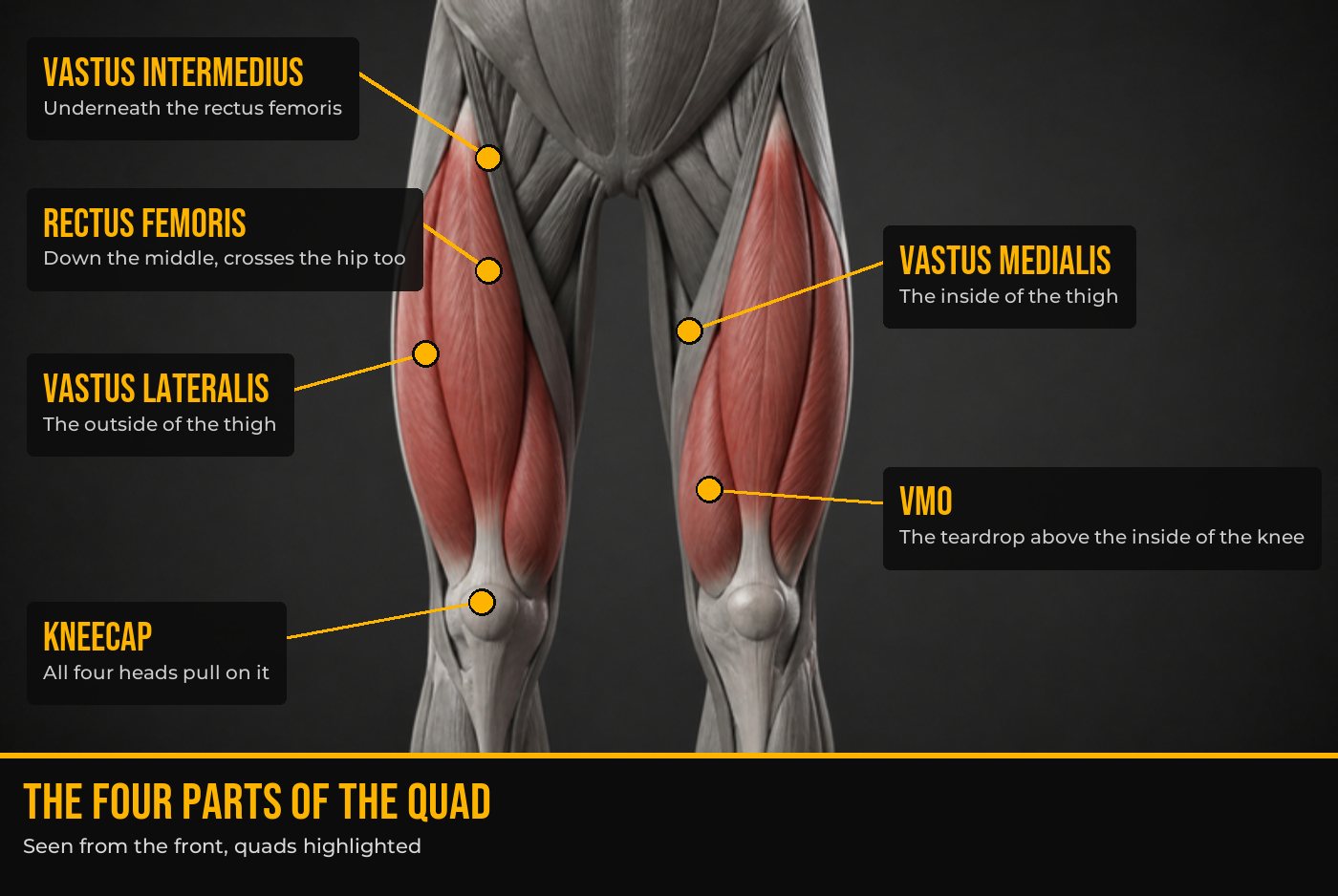
"Quad" is short for quadriceps, which means four heads. All four run down the front of your thigh and join into one tendon that attaches to the top of your kneecap. From there, the patellar tendon connects your kneecap to your shin. So every time your quads tighten, they pull on your kneecap and straighten your knee. Here's who's who:
- Rectus femoris. The long one down the middle of your thigh. It's the only head that crosses your hip as well as your knee, so it helps lift your leg too.
- Vastus lateralis. The outside of your thigh, and the biggest of the four.
- Vastus intermedius. Buried underneath the rectus femoris, right on top of the bone. You can't see it, but it does a big share of the straightening.
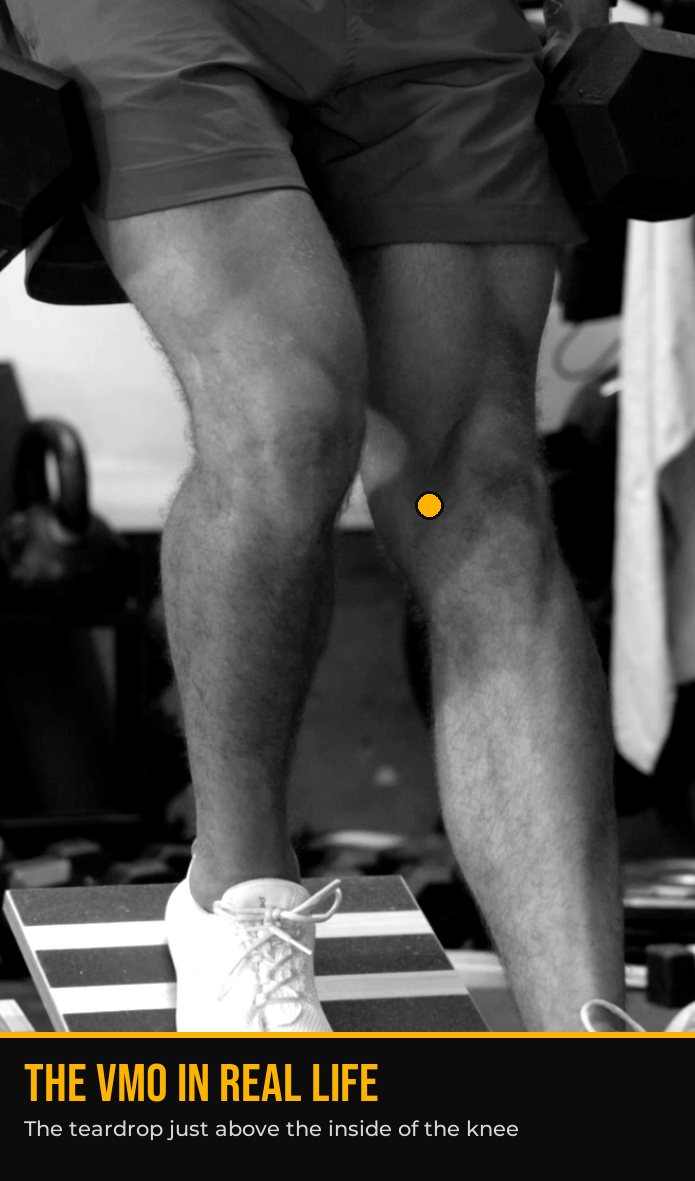
- Vastus medialis. The inside of your thigh. Its lowest part, the teardrop-shaped bulge just above the inside of your knee, is the VMO (vastus medialis oblique), and that's the one this whole post is about.
Why the VMO matters the most
The VMO's fibers run at an angle, so when it fires it pulls your kneecap slightly inward, while the vastus lateralis on the outside pulls it outward. When the two are balanced, your kneecap glides down the middle of its groove. The VMO also tends to be the first part of the quad to shrink after an injury or a surgery, and one of the last to come back, which is why that teardrop is flat on so many knees that have been through a lot.
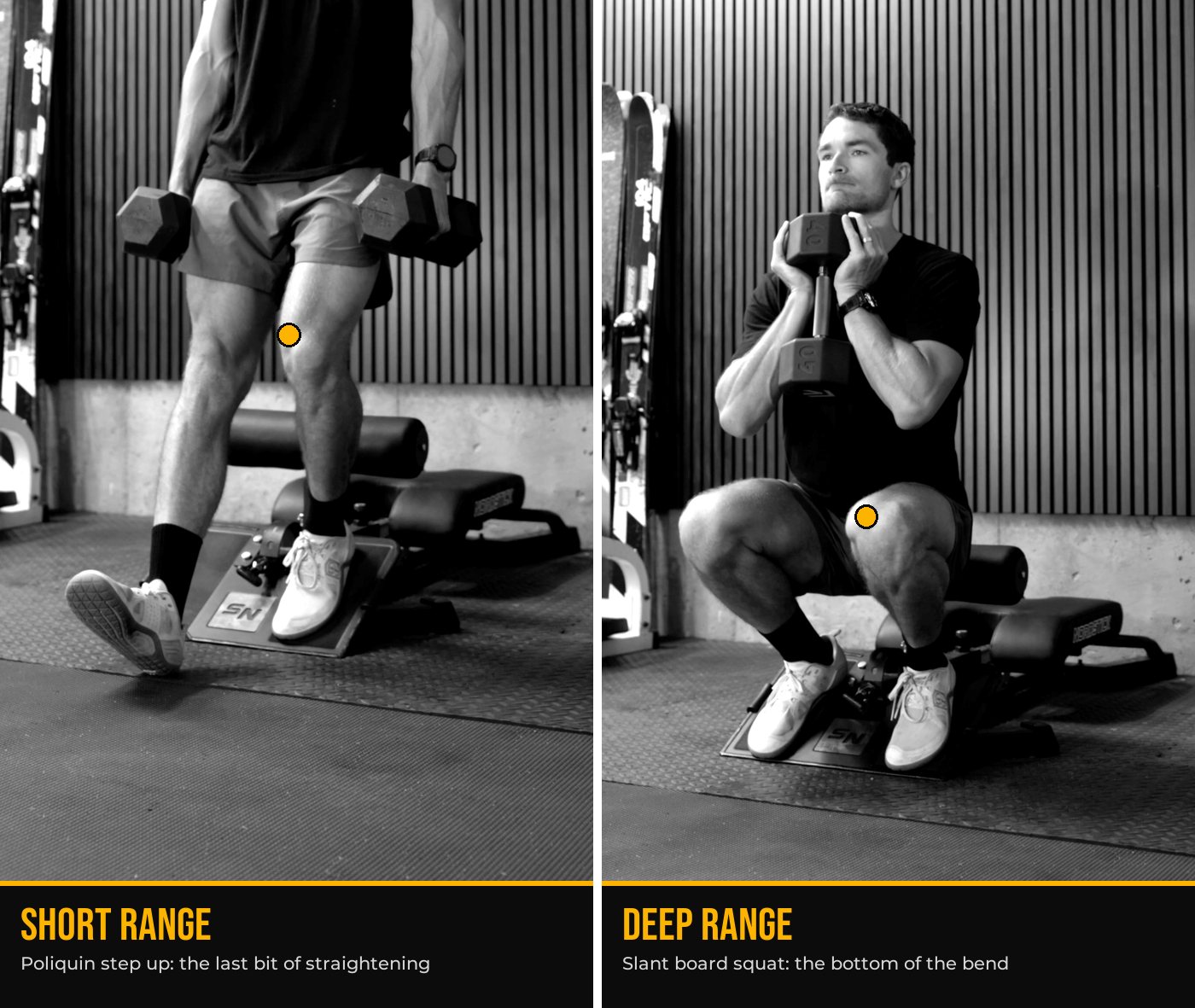
In my experience, and in everything I learned through ATG, the VMO does its hardest work in two spots: the very last bit of straightening your leg, like the top of a step up, and the very bottom of a deep knee bend, like the bottom of a slant board squat. Those are the exact two ranges a sore knee avoids. You stop at the top of the stairs before your leg is fully straight, and you stop halfway down in a squat because going lower feels sketchy. So the VMO sits there unused, it gets weak, your knee gets a little less stable and a little more painful, and you avoid those ranges even more. That's the cycle I want to help you break.
Here's the interesting part: you can't isolate the VMO
No exercise fires one head of the quad and leaves the other three alone, no matter what people on Instagram say. Researchers have tested this a lot. A review of 20 studies covering 387 people found that changing your foot position, turning your toes out, squeezing a ball between your knees, or any of the other "VMO tricks" didn't make the VMO work any harder than the rest of the quad. Your quad fires as a unit.
That's actually good news, because it makes the plan simple. What the research is clear on is this: a quad that's strong through its full range of motion, with hips that can control your thigh bone underneath the kneecap, makes front-of-knee pain settle. A review of 14 trials found that strengthening the hips and the quads together beat quad work alone for both pain and function, and a second review landed in the same place.
And this isn't just about front-of-knee pain. It's about building stronger, more protected knees. In a big review of who goes on to develop knee pain, weak quads were one of the only things that predicted it (in military recruits, the group with the best data). And in a review of nearly 47,000 people, the ones with weaker quads were more likely to develop knee arthritis over the following years. That's where the VMO comes into play: when you train the whole quad in the ranges where the VMO works, you get the strength and the kneecap control at the same time.
So here's the goal. Train the whole quad hard in the ranges you've been skipping. The VMO comes along for the ride. You're not chasing one muscle with some special exercise. You're working the ranges of motion your knee actually needs, and when you do that you can be confident you're doing the right strength training for your knees.
Why the deep bend matters
Life asks your knees to bend all the way whether you train for it or not. Kneeling down to play with your kids. Sitting back on your heels. Getting up off the floor. Squatting down to grab something off the bottom shelf, crouching to tie a shoe, climbing out of a low car, dropping into a deep ski turn. You need that range of motion to keep up with the demands of life, and more than that, you need to be strong in it. A knee that's strong at the bottom of a deep bend is a knee that's protected there.
I know the deep bend is the scary one. We've all been told deep squats are bad for your knees (I wrote a whole post on where "don't let your knees go over your toes" came from), and when your knee hurts, the bottom of a squat is the first place you stop going. But the research on squat depth doesn't back up the fear. A big review in Sports Medicine found that the pressure on the back of your kneecap actually peaks around halfway down, at about a 90 degree bend, and as you keep going deeper it spreads out over more of the joint, so the stress on any one spot drops. On top of that, when people trained deep squats instead of half squats for 12 weeks, their quads grew more and they got stronger at the deep angles the half squatters never trained. Your knees only get strong in the positions you train in.
That doesn't mean you grab some weight tomorrow and drop into the deepest squat of your life. That's probably going to hurt your knees. It's the same as running. If you've been running two miles a few times a week and you suddenly jump to ten, something's going to hurt, and nobody blames running for that. The deep bend works the same way. Earn it a little at a time: learn the movement with your bodyweight, add range of motion, then add weight. Keep any discomfort under a 4 out of 10 while you train, and if your knee feels worse than it did the day before, back off the range or the weight and go from there. Remember, restraint is the hardest trick in the book.
The 5 quad exercises I'd recommend for almost any knee
These are the five I keep coming back to, in the order I'd add them, from the least equipment to the most. The first two are how I start every quad session, and the last one is where the real strength comes from. Each one links to a video of me doing it.
1. Banded TKE
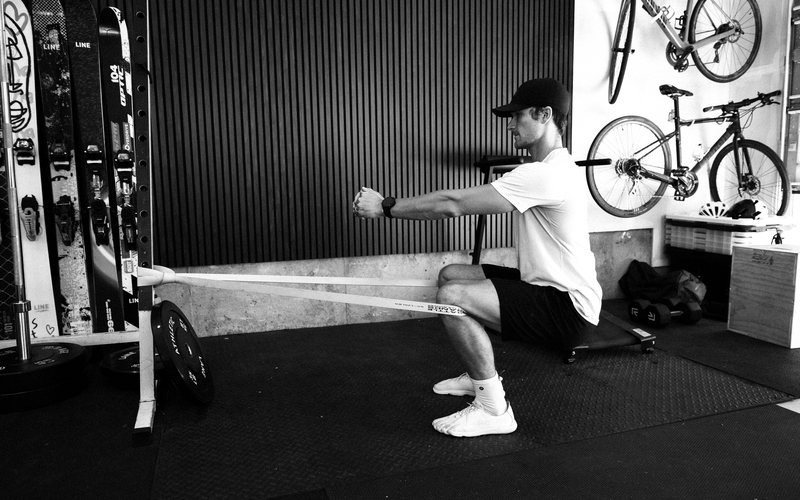
TKE stands for terminal knee extension, which is just that last bit of straightening your leg. Loop a band around a post and behind your knee, step back until it's tight, and squeeze your knee straight against the band. Here's a quick demo. It's the gentlest quad exercise I know, with almost no compression through the joint, and it gets blood moving through a cranky knee fast. I'll be honest, it's not going to build a ton of strength on its own. Think of it as a warm-up. Along with backward sled drags, it's the starting point for any quad session, because it gets the quad awake before you load it.
Start with: 2 sets of 15 to 20 per side as a warm-up.
2. Backward sled drags
Dragging a sled backward is super low impact, it works the quad through the short range (your leg straightens against the load with every step), and it targets the VMO better than almost anything else I've found. It's where I'd start anybody, and it's how I warm up for squats, skiing, running, all of it. I wrote a whole post on why backward sled drags are so good for your knees, and here's a quick demo.
Outside, all you need is a sled and some grass or turf. At home, I use the ATG backward treadmill, which lives in my garage and gets used just about every day (here's my full review of it). If you don't have either, walking backward up a hill or on a slight incline gets you most of the way there.
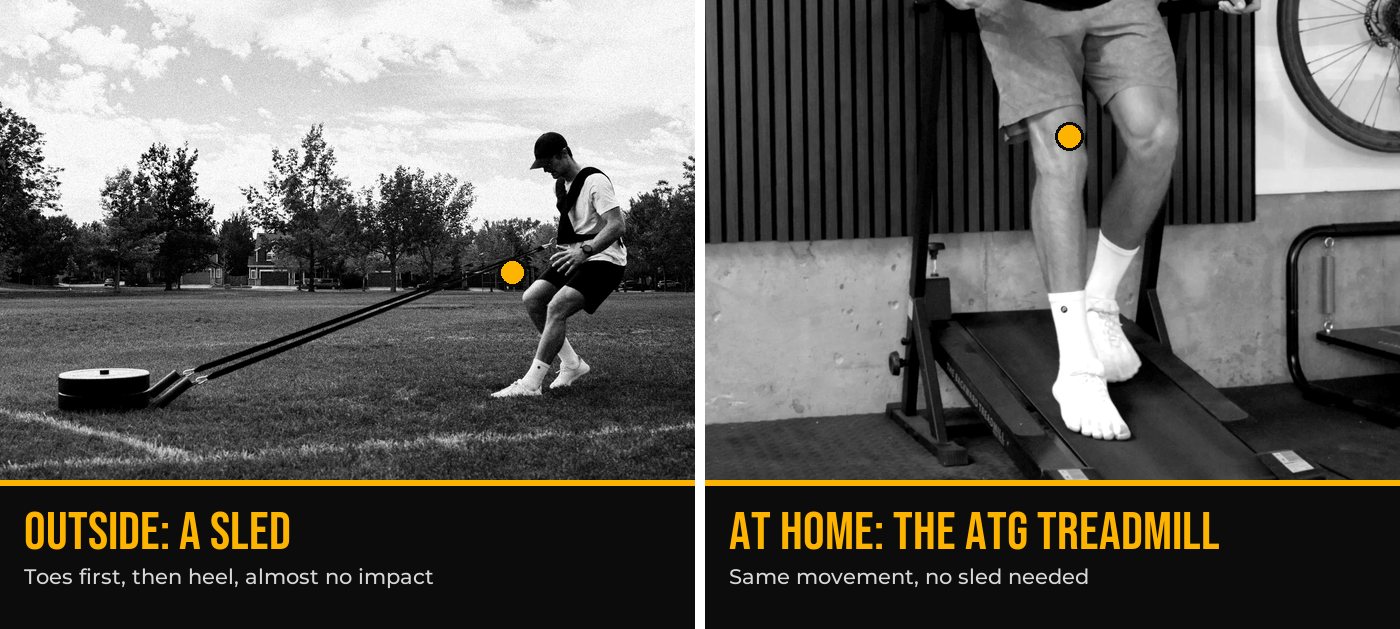
Start with: 3 to 5 minutes as a warm-up before you train, or 10 minutes three times a week on its own.
3. Poliquin step up
This is the short range under real load, and it's the single best VMO exercise I know. Stand on a slant board or a plate with your heel up, push your knee forward over your toes, lower your other heel to the floor slowly, then drive back up until your leg is completely straight. Here's a quick demo. That slow lowering is the exact quality that's missing when stairs hurt. Once bodyweight is easy, grab a pair of dumbbells.
Start with: 3 sets of 10 per side, slow on the way down.
4. Deep slant board squats
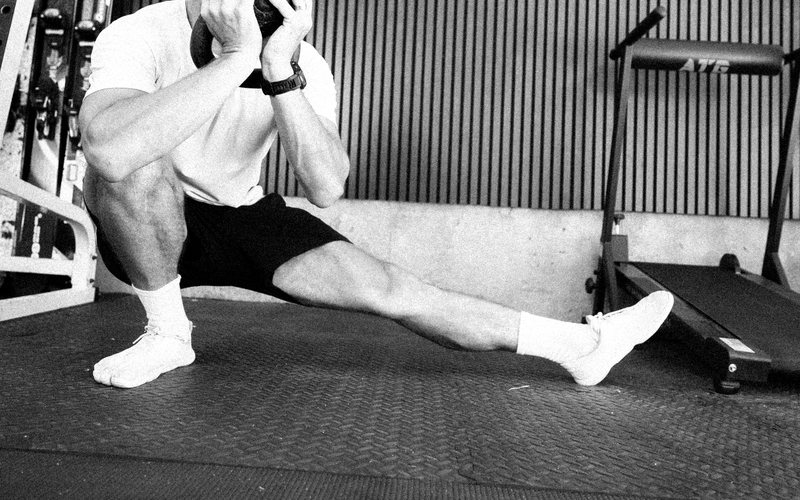
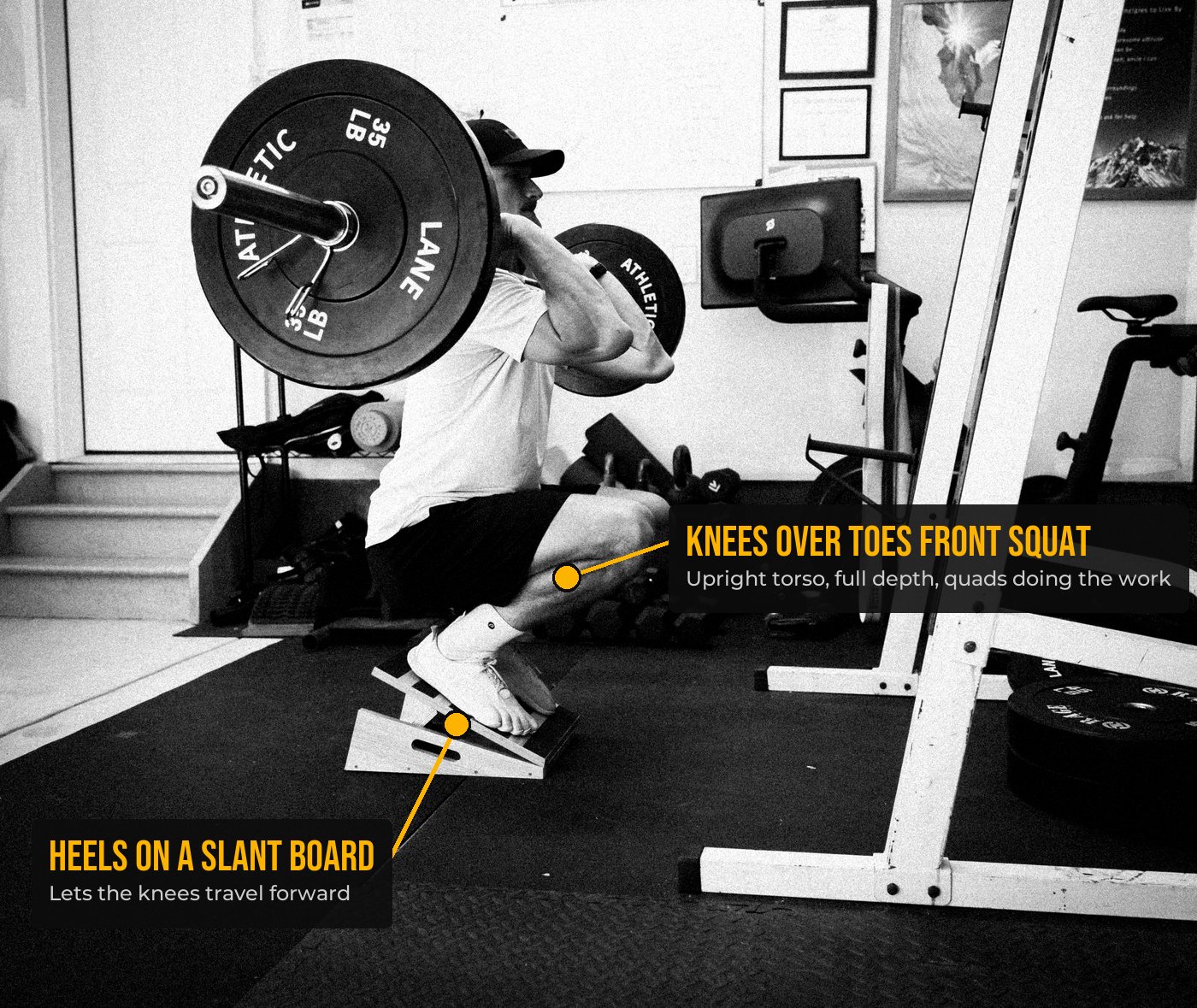
Now the deep range. With your heels up on a slant board your knees can travel forward over your toes, which lets you sink all the way to the bottom with an upright torso, so the quads take the work instead of your hips and low back. Go as deep as you can with no pain, pause at the bottom, and stand up. Here's a quick demo, and here's a longer breakdown of how I coach it. Start with bodyweight, then hold a dumbbell at your chest, then two.
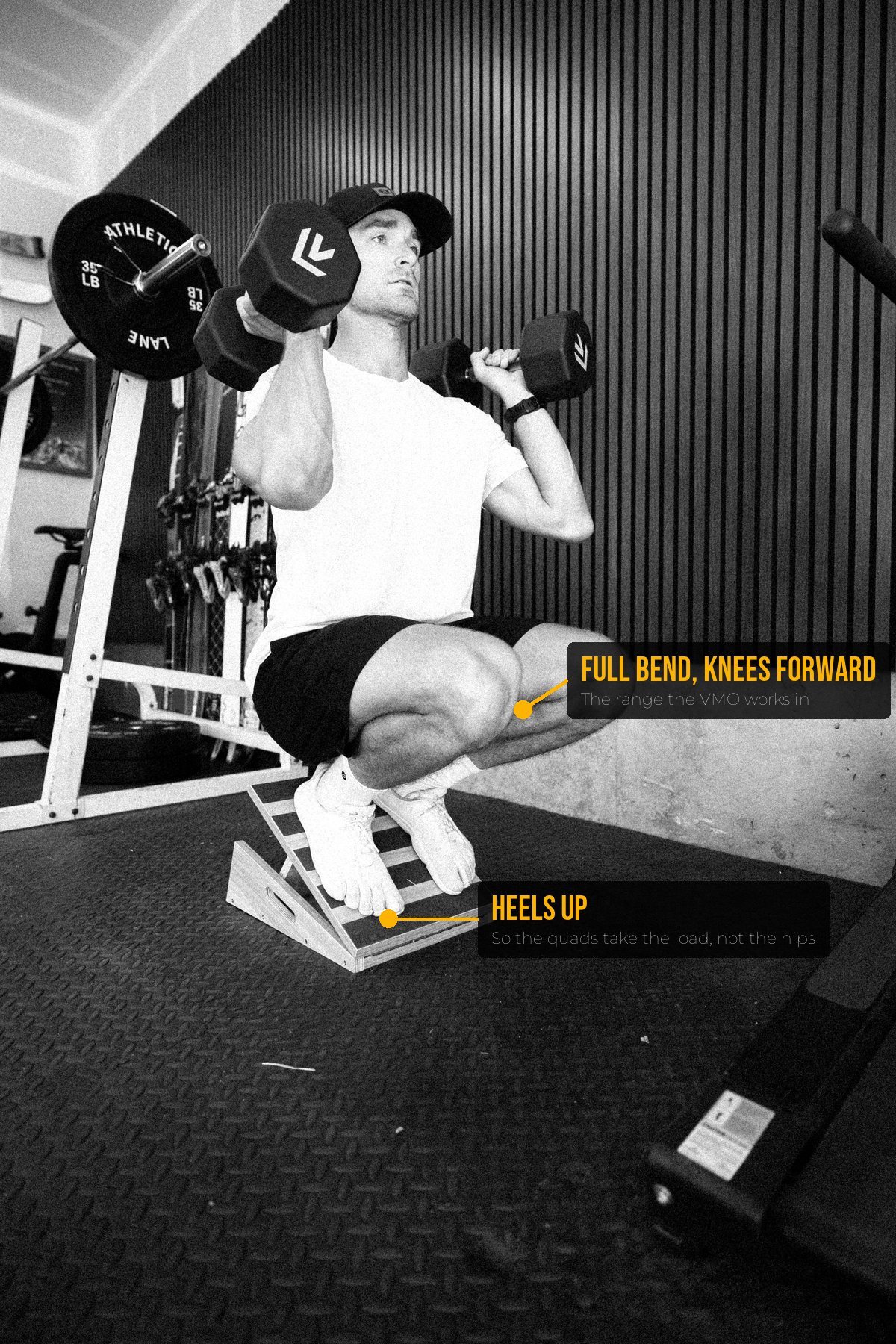
Start with: 3 sets of 10, as deep as you can go pain-free.
5. Barbell back squats or front squats
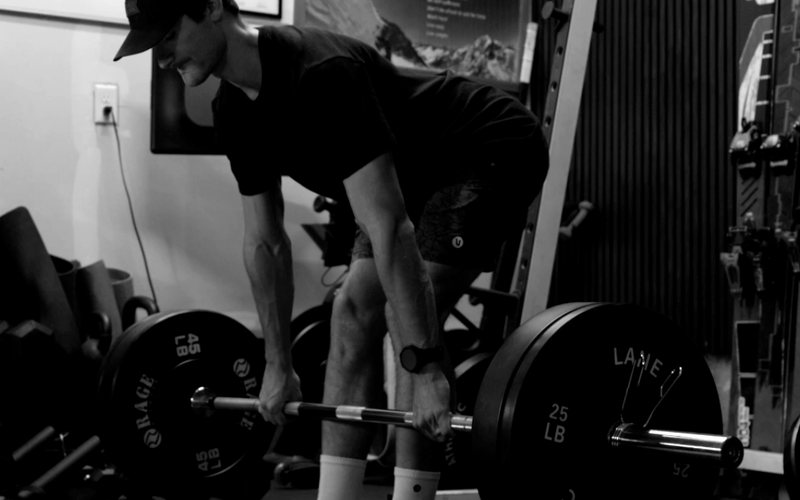
There's no better way to strengthen your quads than working heavy squats through a full range of motion, and everything above is there to get your knees ready for this. A back squat lets you load the most weight (here's a demo, and here's the slow tempo version I use a lot). A front squat keeps your torso more upright, which pushes even more of the work into your quads. Either way, add a little heel elevation, a slant board or a pair of plates under your heels, to bias the quads and grow that VMO. No barbell? A goblet squat with one dumbbell works the exact same way, and it's where I'd start.
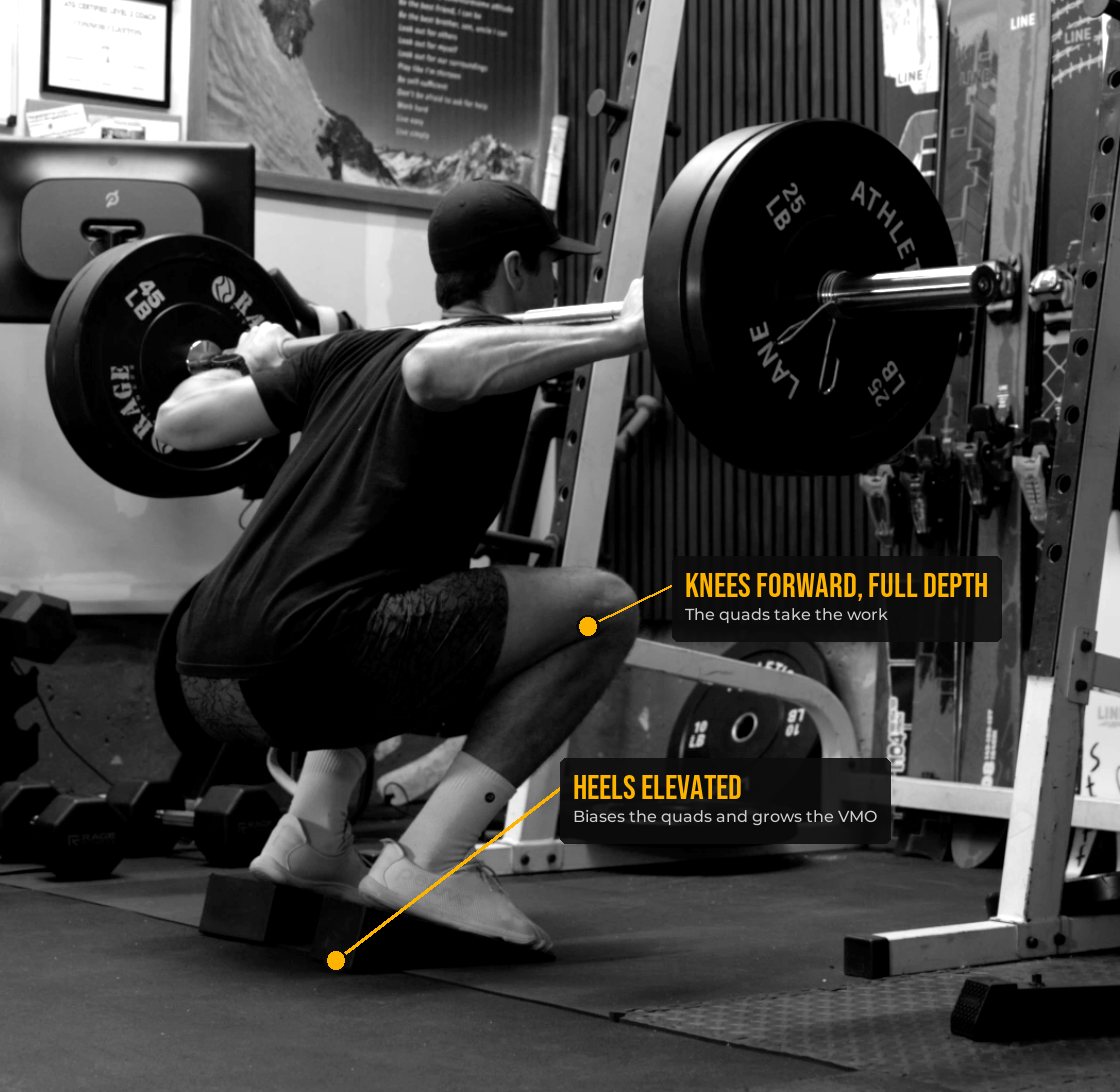
Start with: 3 sets of 5 to 8 with a weight you can take all the way down with good form, and add 5 to 10 percent when it feels solid.
How to put it together
Two or three quad sessions a week is plenty. Start every one with the banded TKE and a few minutes of backward walking, then pick one short-range movement (the Poliquin step up) and one deep-range movement (slant board squats, and barbell squats once you've earned them). That's it. Progress the range of motion first, then the weight, and focus on getting 1% better each week. You can't lose if you don't quit!
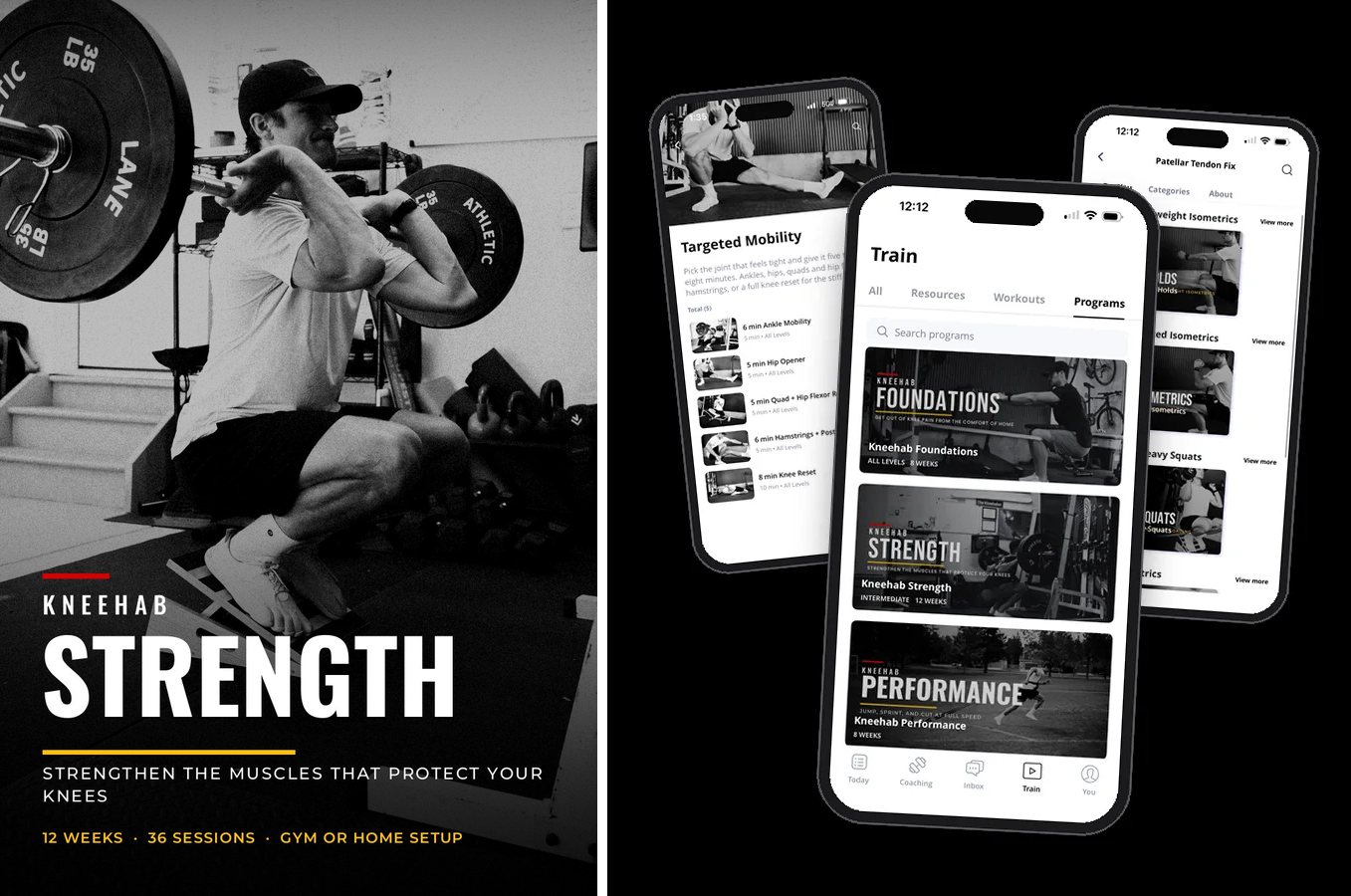
If you'd like this written out for you with real weight, that's what my free Kneehab Strength guide is. It's three days a week of the lifts the Strength program is built on, with a warm-up for every session, a 12-week plan for adding weight, and a video of me doing every exercise.