Living Without an ACL: How My Knee Works Without a Crucial Ligament
Connor Clayton · The Kneehaber ·
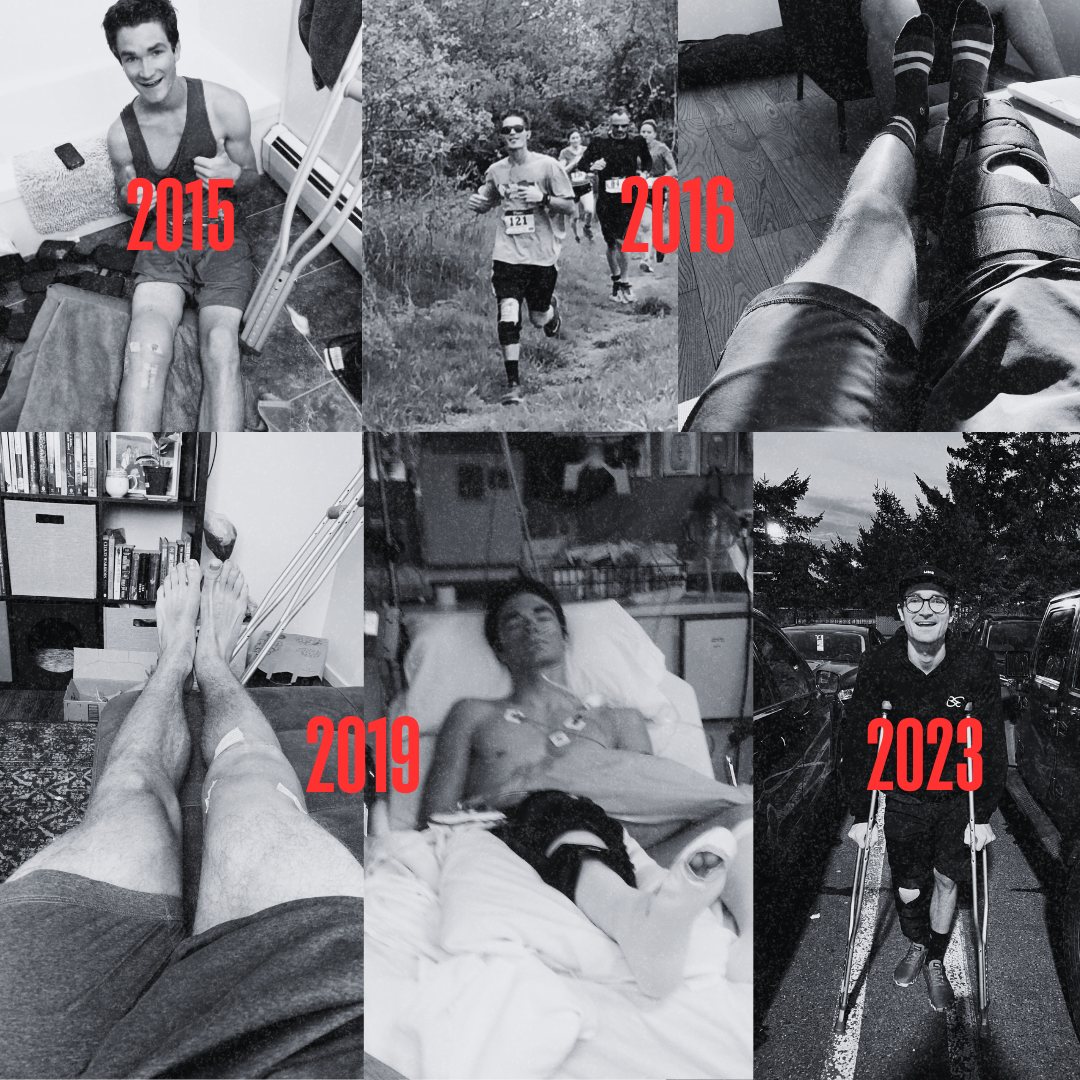
This post is about living without an ACL. I've torn the ACL in my right knee four times: in 2015, 2016, 2017 and 2023. I had it rebuilt after the first three, and after the fourth I didn't rebuild it. It's a long story. If you want to read the whole thing, I wrote it up here. Grab a coffee, it'll take a little while.
Where I am today is that I don't have an ACL in my right knee, and I still run half marathons, do CrossFit, play hockey and ski. So in this post I want to walk through who living without an ACL can work for, how my knee works without one, the strength training that makes it possible, what it costs, and how I train. I hope it helps!
Four tears, one knee. Crutches in 2015, 2016, 2019 (the third reconstruction) and 2023.
Who this article is for
Living without an ACL isn't for everyone, so I want to be clear about who I'm talking to.
If you've torn your ACL more than once, you're over the surgeries, and your knee feels stable enough to live a normal life, this article is for you. If you've torn it once, you're younger and you're trying to get back to your sport, then sorry, I'm not speaking to you in this one. You should be talking with your surgeon and a physical therapist, who are more qualified to handle that than I am.
I'm a strength coach, not a surgeon. To be clear, I'm not suggesting you live without an ACL. It's what I chose for my own knee, with my history, and it's a decision to make with your surgeon. What I can do is show you how I made it work, what it took, and what it cost me.
What the ACL actually does
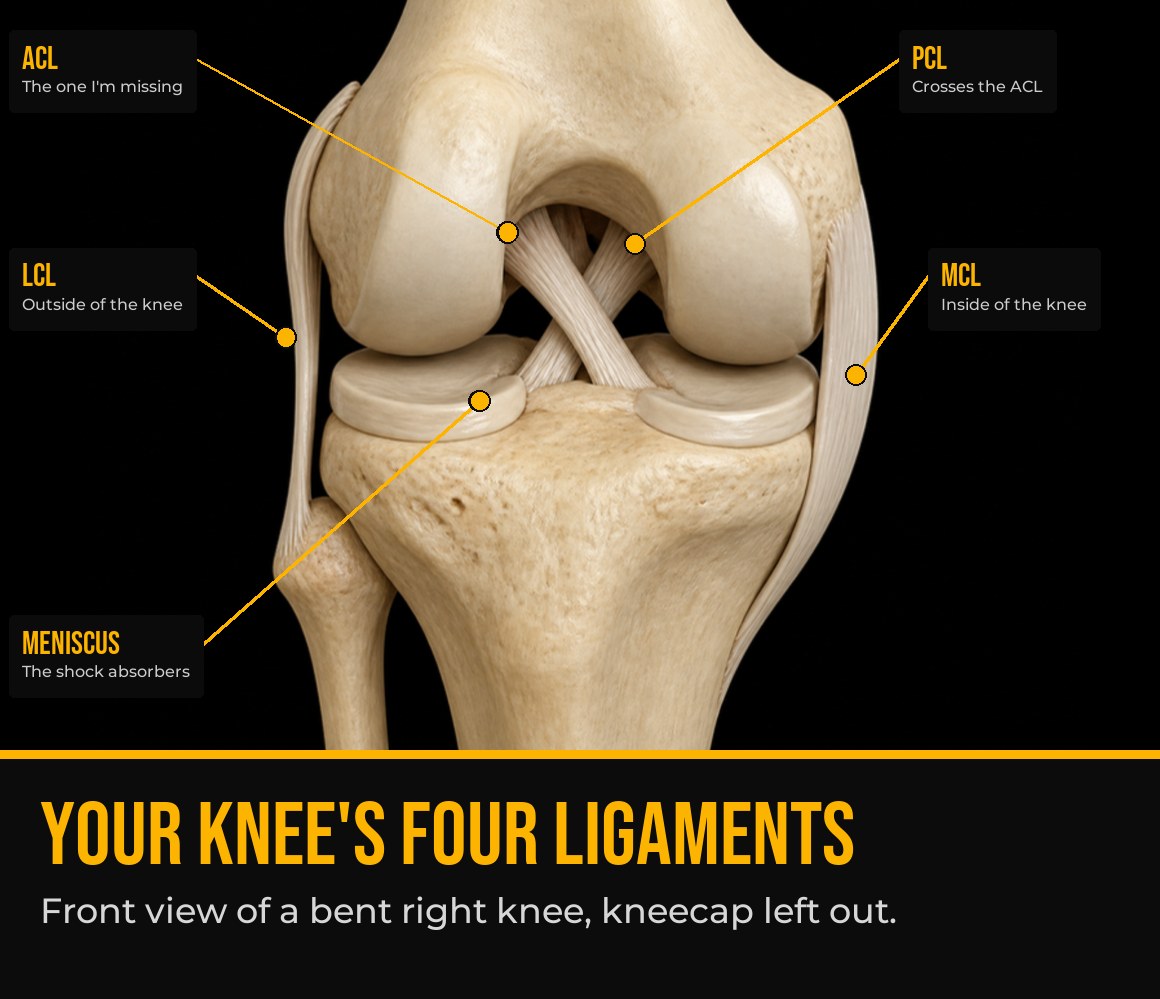
Your knee is where your thigh bone sits on top of your shin bone, and four main ligaments hold those two bones together. Two of them run down the sides: the MCL on the inside of your knee and the LCL on the outside. The other two cross each other in the middle of the joint: the ACL in front and the PCL behind it. That's why the title of this post says "a crucial ligament." My knee still has the other three. It's just missing the one in the middle.
The four ligaments in your knee. The ACL, one of the two that cross in the middle, is the one I don't have.
The ACL's main job is to stop your shin bone from sliding forward under your thigh bone. It also stops the two bones from twisting too far on each other, and that's the part that matters in sports. Walking and running in a straight line barely use it. Planting, cutting, pivoting and landing off balance is where you need it, which is why skiing, soccer, basketball and football are where so many ACLs get torn.
The ACL also has sensors in it. A study that looked at the ligament under a microscope found nerve endings that tell your brain where your knee is and how fast it's moving. So when the ACL is gone, your knee is a little looser and your brain is getting less information about it. That's why balance and landing practice is part of how I train.
The strange thing about a torn ACL is that you can't always tell. Two of my four tears were painless, just a pop. And after my fourth ACL tear, I'd actually been walking around on the fully torn ACL for about six months, not knowing it was torn. I only found out when I hit a tree skiing in Japan and the MRI showed the ligament had already been gone for a while. In those six months I was playing flag football, skiing, running hard, running half marathons and doing CrossFit. I'll come back to that.
Rebuild it or live without it
A fully torn ACL usually doesn't heal back together the way a broken bone does. So after a tear there are really two options: have it rebuilt, or train the muscles around your knee to do its job. Which one makes sense depends a lot on what you want your knee to do.
If you want to get back to high-level sports, surgery is almost always the answer. I'm talking about sports with a lot of jumping, pivoting and changing direction, like soccer, basketball, football or competitive skiing. That's why I had mine rebuilt three times. Even though I kept re-tearing it, surgery was what it took to get back to the competitive skiing I wanted to do.
If you're past that stage, you can likely live without your ACL with the proper training. I'm talking about someone who wants a high quality of life and wants to stay active, but isn't trying to get back into high-level sports. That's where I am now. I'm able to do a lot without my ACL, and I've worked really damn hard to make sure I can.
The research backs up that this is a real choice. In the biggest trial on it, a Swedish study called KANON, young active adults with a fresh tear either had surgery early, or started with rehab and only had surgery later if the knee stayed unstable. Five years later the two groups were doing about the same, and about half of the rehab-first group never had the operation. On the other side, a British trial looked at people whose knees were still unstable months after the injury, and for them surgery did better than rehab alone. So a knee that keeps giving way belongs in a surgeon's office.
Surgery doesn't replace the strength work either. One review found that young athletes who go back to their sport after an ACL reconstruction have close to a one in four chance of a second ACL injury. I'm one of them. I passed my return-to-sport test with a perfect score about six months after my first surgery, and I re-tore the ACL a few months later. In another study, the athletes who waited at least nine months and passed their strength and hop tests before going back got hurt far less often than the ones who went back early. With or without the surgery, how strong your leg is makes a big difference.
What I chose, and why. After the fourth tear I held off on surgery. I'd just found out I'd already been living without an ACL for six months, and I wasn't ready to go through a fourth reconstruction just to maybe tear it again. Since then my surgeon has looked at my imaging (severe arthritis, barely any meniscus, a knee that's been rebuilt three times) and told me that surgery wouldn't even help me at this point, and that a new graft probably wouldn't hold anyway. So I put everything into strength training instead.
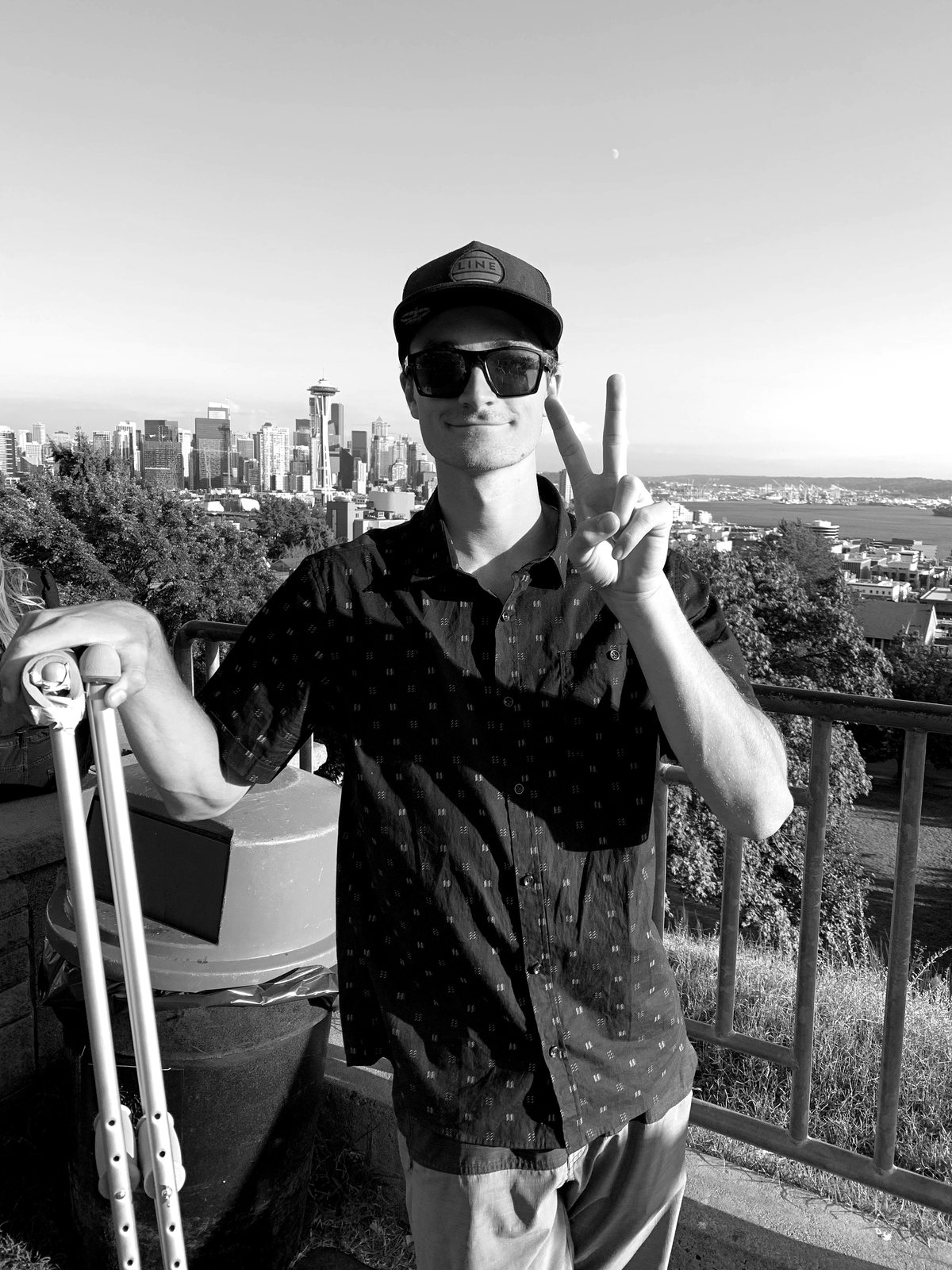
Seattle, 2019, after my third ACL reconstruction.
How a knee works without an ACL
Some people's knees stay stable without an ACL, and researchers call those people copers. A coper is someone whose knee doesn't give way even though the ligament is gone, because the muscles around the knee have taken over its job. In a ten-year study out of the University of Delaware, roughly four in ten active people with a fresh tear passed a screening test as potential copers. And it's something you can train. A follow-up study found that after a few weeks of progressive strength and balance training, nearly half of the people who failed that test the first time passed it.
That's what I think happened in those six months I spent on a torn ACL without knowing it. I'd been training hard for years by then, and my leg was strong enough that I couldn't tell the ligament was gone.
The other half of being a coper is that your knee can't be giving way on you. If your knee keeps buckling, you risk damaging your meniscus and your cartilage every time it does, and that's when it's time to go see a surgeon.
Strength training is what makes it possible
If your knee isn't strong, you're not building the muscles around it, and you're trying to live without an ACL, then frankly, good luck. The ligament is gone, so your muscles have to do its job, and they can only do that if they're strong. Bands and bodyweight are where you start. Real weight, built up over months and years, is what keeps a knee like mine stable, and it's what my Strong Knees System is built around.
These are the muscles doing the ACL's job in my knee now.
Your hamstrings come first
Your hamstrings run down the back of your thigh and attach just below the back of your knee. When they pull, they pull your shin bone backward, which is exactly what the ACL does. Researchers showed this back in 1987: when the shin bone starts to slide forward, the hamstrings fire to hold it back. In a knee with no ACL they're doing that job on their own, so strong hamstrings are quite literally my replacement ligament.
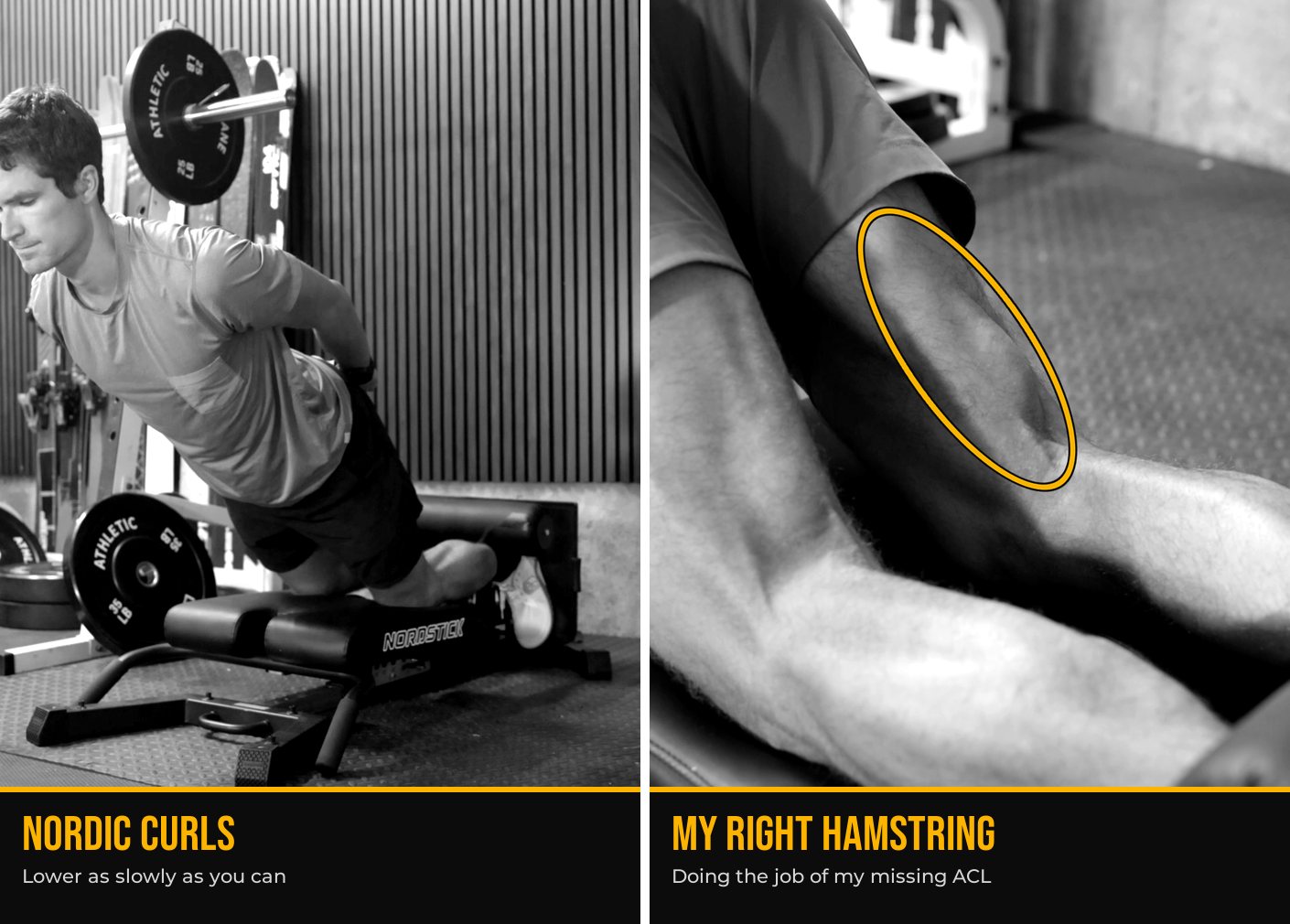
I train them two ways: lowering slowly with Nordic curls, and lifting heavy with RDLs. The photo on the right is from the middle of a set of Nordics, and I circled the outer hamstring on my right leg, the biceps femoris. You can see this muscle popping off because it's working so hard to take the place of my missing ACL.
Nordic curls, and a close-up of my hamstrings in the middle of one. The circled muscle is the biceps femoris on my right leg, the one with no ACL.
Your quads, your hips and everything below your knee
Your hamstrings can't do it alone. Your quads absorb the force every time you land, slow down or walk downhill, so I train them with heavy squats. Your hips control where your thigh bone points, and strong hips keep your knee from caving inward, which is the position ACLs tear in. Your calves, your feet and the tibialis muscle on the front of your shin take the first part of every landing before it gets to your knee. And since the sensors in the ACL are gone, I practice single-leg balance and landings so my leg knows where it is without them.
I have another article of mine on each of those if you want to go deeper: quads, hips, and feet and ankles.
Knees over toes
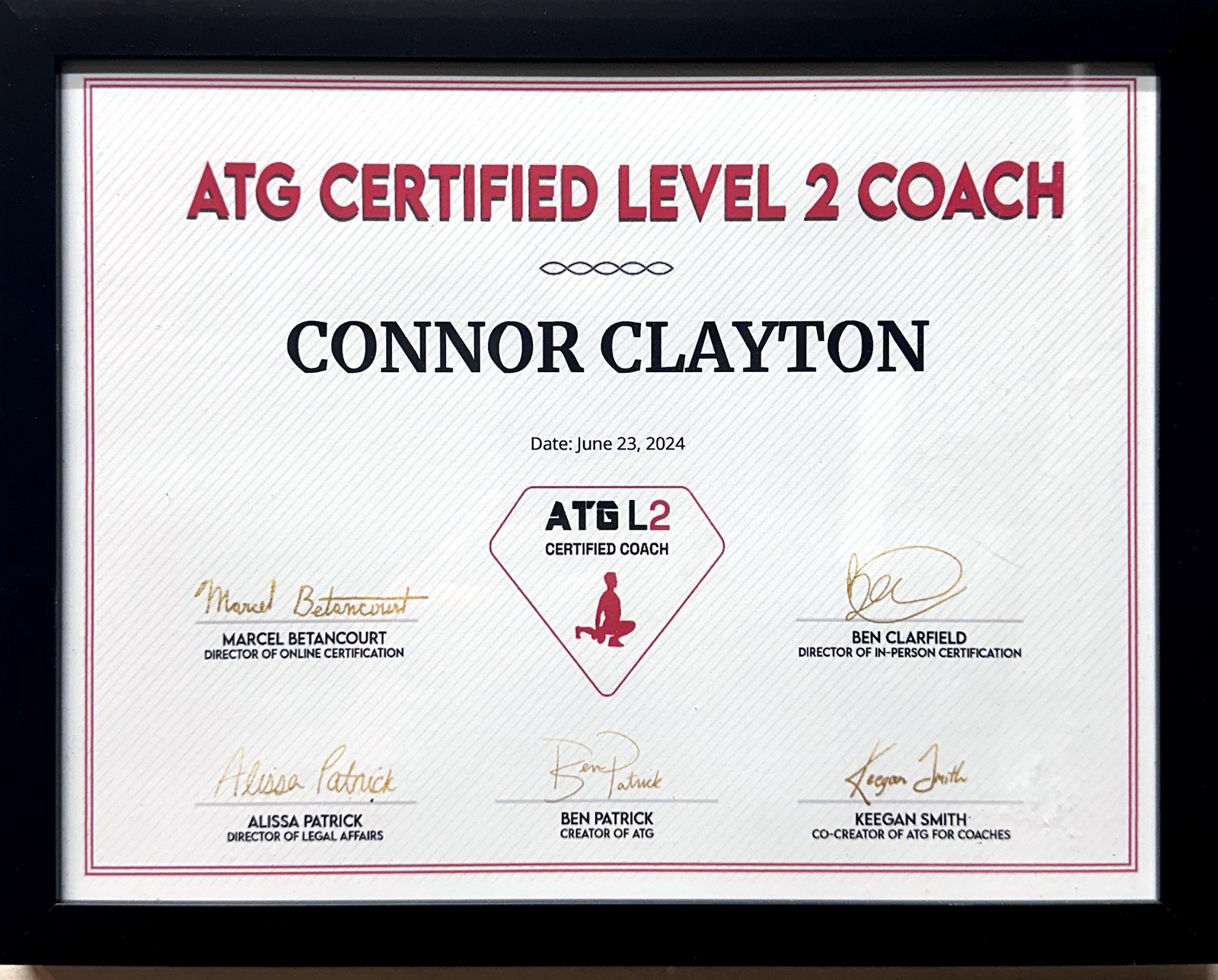
A lot of how I train comes from the knees over toes method. Ben Patrick's ATG program was a big part of what helped me after my fourth ACL tear, and it's a big reason I'm still able to do so many things without knee pain, even without an ACL. I went on to earn my ATG Level 2 coaching certification, and it's a lot of what I teach now. If that's new to you, start with another article of mine, Why You Should Be Training Knees Over Toes.
My ATG Level 2 coaching certificate.
Grab the free Kneehab Strength guide first
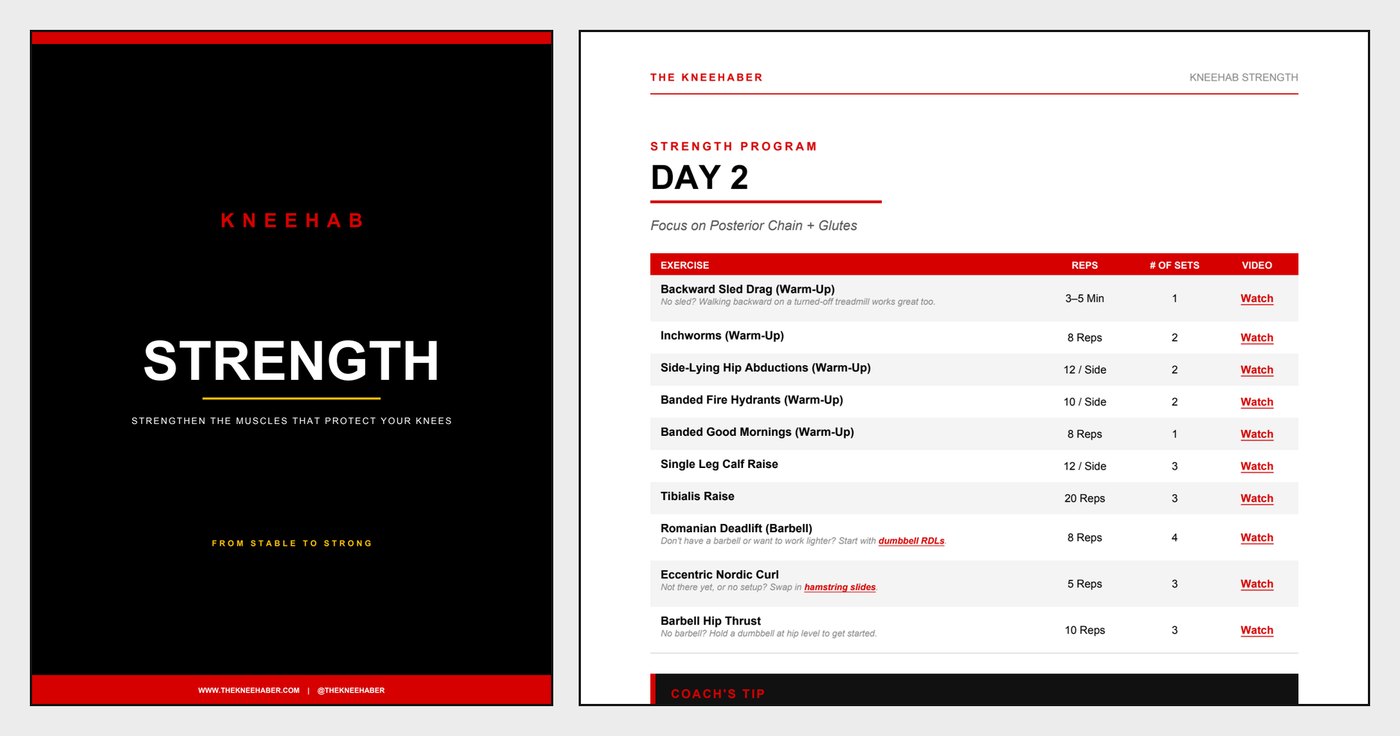
Since strength is what this whole post comes down to, the free guide I'd start with is Kneehab Strength. It's three workouts a week with dumbbells, kettlebells and a barbell: one day for your quads, one for your hamstrings and glutes, and one for single-leg work and your hips. Every exercise has the sets and reps and a video of me doing it. Not everyone makes it to the bottom of a long article, so grab it now and read the rest with it open.
Free download
The Kneehab Strength Guide
The strength routine from this article as a PDF you can pull up at the gym: three days a week of squats, step ups, RDLs, Nordics and hip thrusts, with the sets and reps for everything and a video of me doing every exercise.
The PDF lands in your inbox in about a minute. You'll also get my weekly knee-training email, and you can unsubscribe anytime.
This is the layout I'd recommend, and it's the same one the Strength guide uses: three days a week (I like Monday, Wednesday and Friday), with one day for quads, one for hamstrings and glutes, and one for single-leg work and hips. Every day opens with a short warm-up for your feet, calves and tibialis. The guide has that written out, so I'll stick to the main lifts here.
Start light for the first month and nail the form. After that, add 5 to 10 percent whenever a lift feels solid. Working at a 4 out of 10 pain or lower is fine. Above a 4, back off the weight or the range of motion.
Day 1, quads.
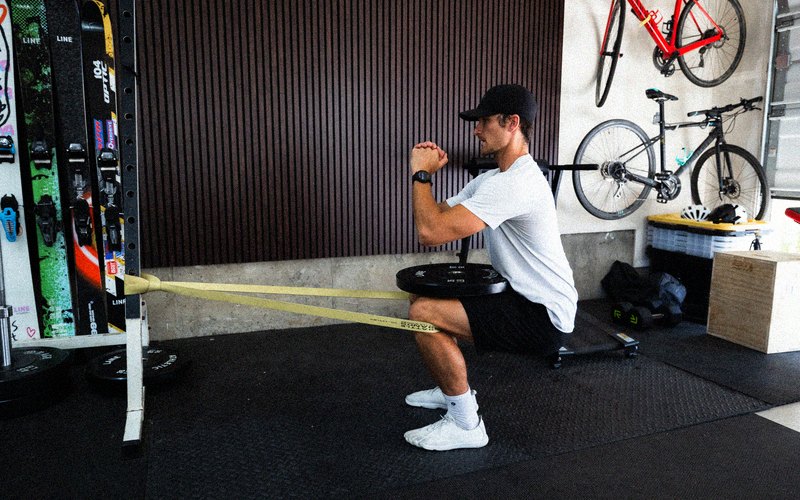
Barbell back squats. Start with 5 sets of 5. No barbell yet? Start with slant board squats holding a dumbbell. There's no better way to build your quads than working heavy squats.
Poliquin step ups. Start with 3 sets of 10 a side, slow on the way down.
Horse stance squats. Start with 3 sets of 12. It feels awkward at first, and that's normal.
Kickstand squats. Start with 3 sets of 10 a side. Train your weaker leg first.
Then balance and landings. Once those lifts feel solid and your knee is calm, add the balance and landing work, because that's what a knee with no ACL has to relearn. Start with single-leg balance (2 rounds of 30 seconds a side). From there it's pogo hops (3 sets of 20), then depth drops where you land soft and hold the landing for two seconds (3 sets of 5). Sideways landings like skater hops come last. I urge you not to skip ahead to the fun stuff. The strength comes first.
If you'd rather have all of this built out for you week by week, with the weights going up as you get stronger, that's the Kneehab Strength program inside the Strong Knees System.
What it costs
Living without an ACL isn't free, and I'd be doing you a disservice if I only showed you the good parts.
It cost me a meniscus and an LCL once. In 2016 I re-tore my ACL in January and decided to ski the rest of the season on it in a brace. I had a great season. Then in June, what should have been a two-hour surgery turned into a seven-hour one, because my lateral meniscus and my LCL were torn too, and I spent six weeks on crutches. When the ACL is gone, the knee can shift in ways it shouldn't, and over time that wears on the meniscus and the cartilage.
Arthritis. My imaging now shows severe arthritis and barely any meniscus. That's common after this injury, with or without surgery: a big review found that around half of the people with an ACL or meniscus injury have arthritis 10 to 20 years later. A scan doesn't decide what you can do, though. I wrote about that in another article of mine, You Are Not Your MRI.
It's harder if your meniscus is torn too. If you tore your meniscus alongside your ACL, living without the ACL gets more difficult, because you have to keep that meniscus protected if you want to avoid arthritis and bone on bone down the road. I wrote another article about that too: Torn Meniscus: Why Training Comes First.
The training never stops. It's one to three focused kneehab sessions a week, every week, for life. If I skip them, I feel it. Years of favoring this knee also gave me patellar tendonitis in the other one.
I still get flare-ups. With a knee like mine, of course I do. When it happens I back off the hard training and the heavy weekend stuff, but I don't stop training my knee. I go to isometrics first (wall sits and split squat holds), then add some light range of motion, then bring the weight back as long as the pain doesn't climb. The full routine is in another article of mine, Knee Flare-Ups: Why Isometrics Are the Best Thing You Can Do.
There's one thing I stay away from. Full-speed, unpredictable cutting is the thing most likely to catch my meniscus or speed up the arthritis. That doesn't mean I quit the sports I love. I just changed my role in them: I play goalie in soccer and quarterback in flag football. If I ever wanted to go back to full-speed cutting sports as a regular thing, that's the one situation that would send me back to a surgeon.
Braces. I rarely wear one day to day. For long runs I wear supportive tights from Stoko (they pay me to make content now, but I bought them and loved them first). For hard park skiing, cliffs and tricks, where a landing could hyperextend my knee, I wear a rigid CTI brace. Both are in my go-to gear for stronger knees.
The mental side. This was the hardest part for me, harder than the crutches and the surgeries. Four ACL tears over eight years meant something like five years of my life spent rehabbing. After my third tear, on the first day of my senior year of college, I sat down in the middle of the field and cried in front of everyone, because the second I felt the pop I knew exactly what the next year was going to look like. If your injury is wearing on you mentally, you're not weak and you're not alone. I got help, I started seeing a therapist, and training became one of the biggest things that got me through it. There are still a few movements where my brain gets a little timid, like skipping or landing on one leg from a big height, because it knows something's missing. I'm still working on those, and that's okay.
What this knee lets me do
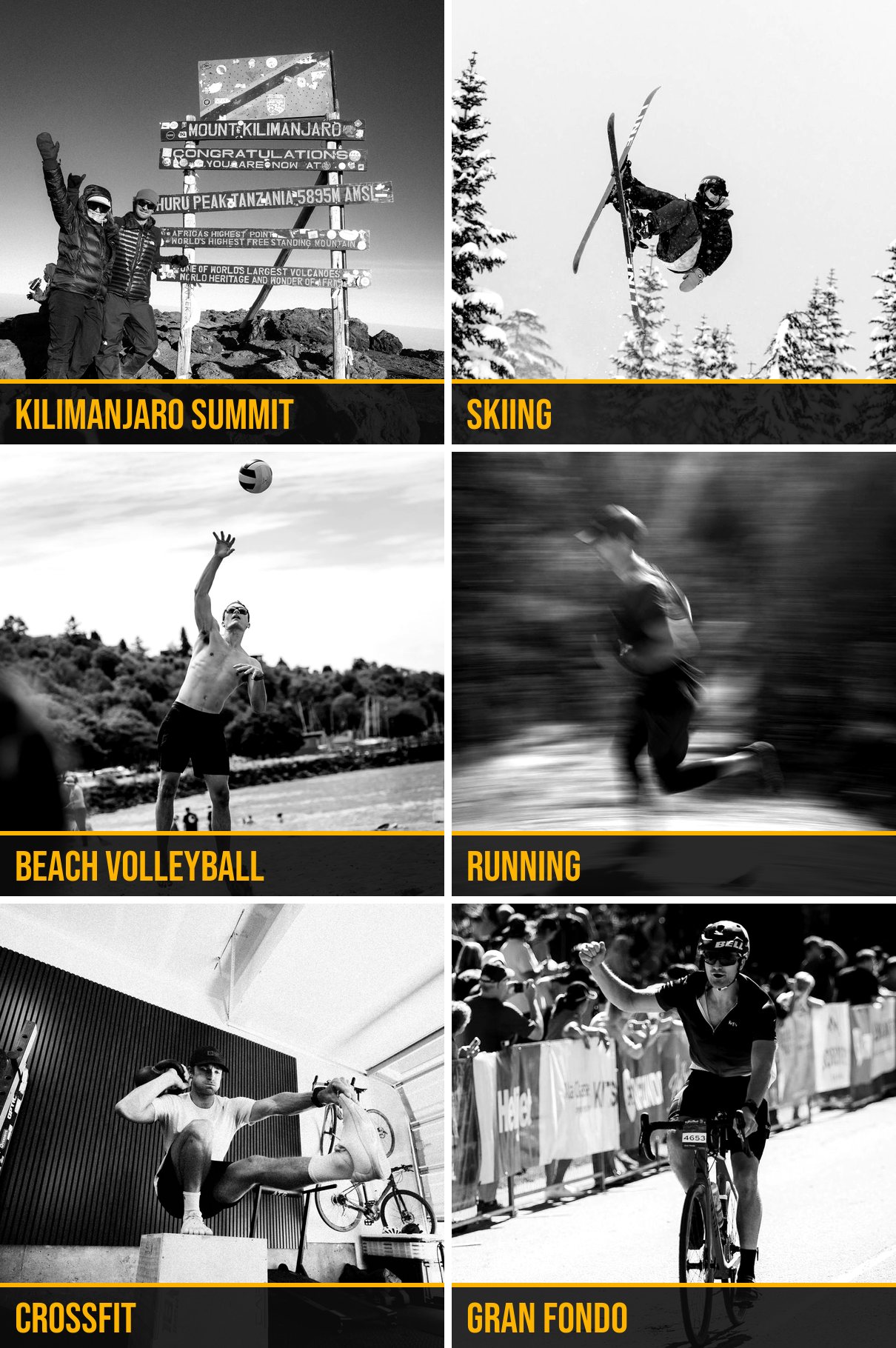
That's a long list, so here's the other side of it. Since the fourth tear this knee has summited Kilimanjaro, skied every winter, run two half marathons and played a lot of beach volleyball, and I do CrossFit every week. Right now I'm playing hockey and training for a marathon. Most of the time I honestly forget the ACL is gone.
What this knee has done since the fourth tear, all without an ACL: the summit of Kilimanjaro this September, skiing every winter, beach volleyball, two half marathons, CrossFit every week, and the Gran Fondo bike ride from Vancouver to Whistler.
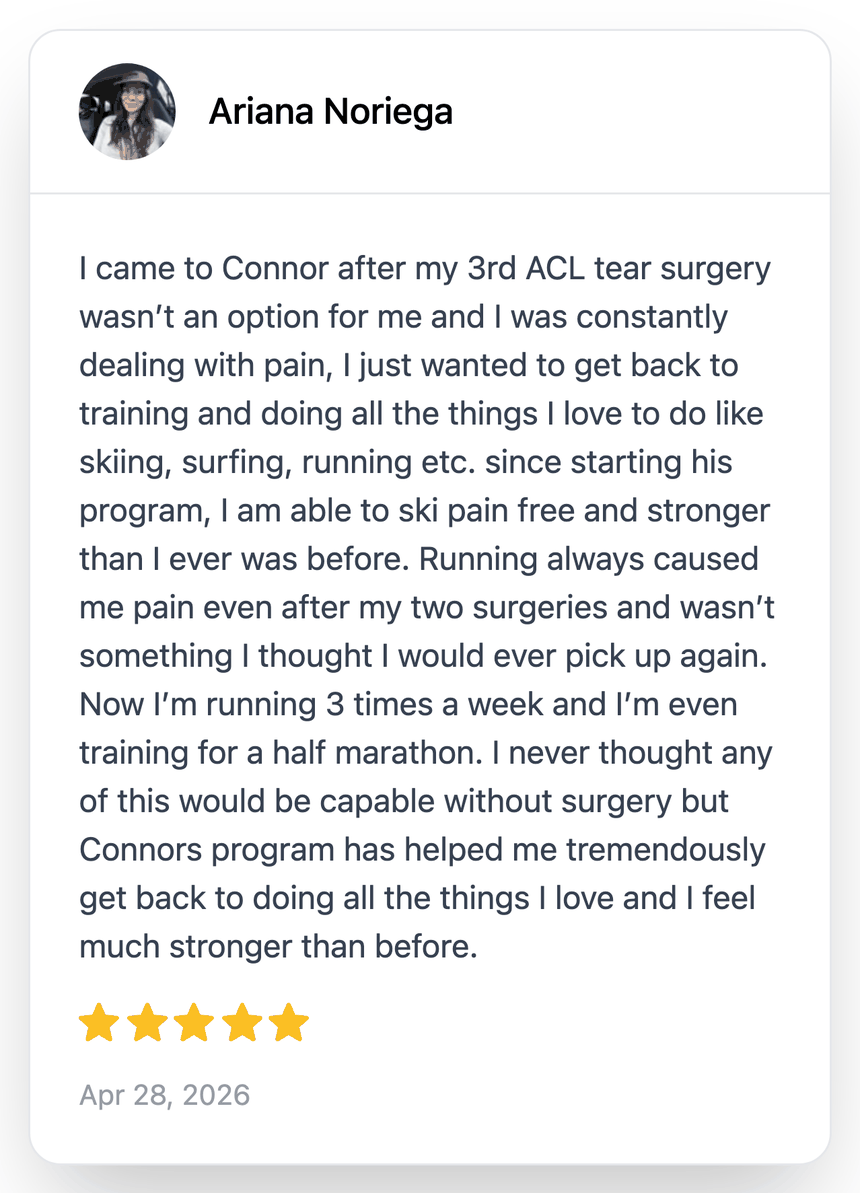
And it's not just me. Ariana came to me after a third ACL tear, when surgery wasn't an option. Here's Ariana's review, straight from Senja:
A few things aren't a training problem. A fresh injury with a pop, fast swelling and a leg you can't trust needs a doctor before it needs a program. So does a knee that locks and won't fully straighten or bend. And if your knee keeps giving way even after months of good training, that's a conversation to have with a surgeon, because every time it gives way you're risking your meniscus. If you've had surgery, your surgeon's protocol and timeline come first, and I'd never tell you to go against them.
How to go from living without an ACL to thriving without one
If you're trying to live without an ACL and you want a program you can follow to actually help you get there, the Strong Knees System is everything I've learned over my last ten years of kneehab. It's how I'm still able to do the things I do now, even without an ACL.
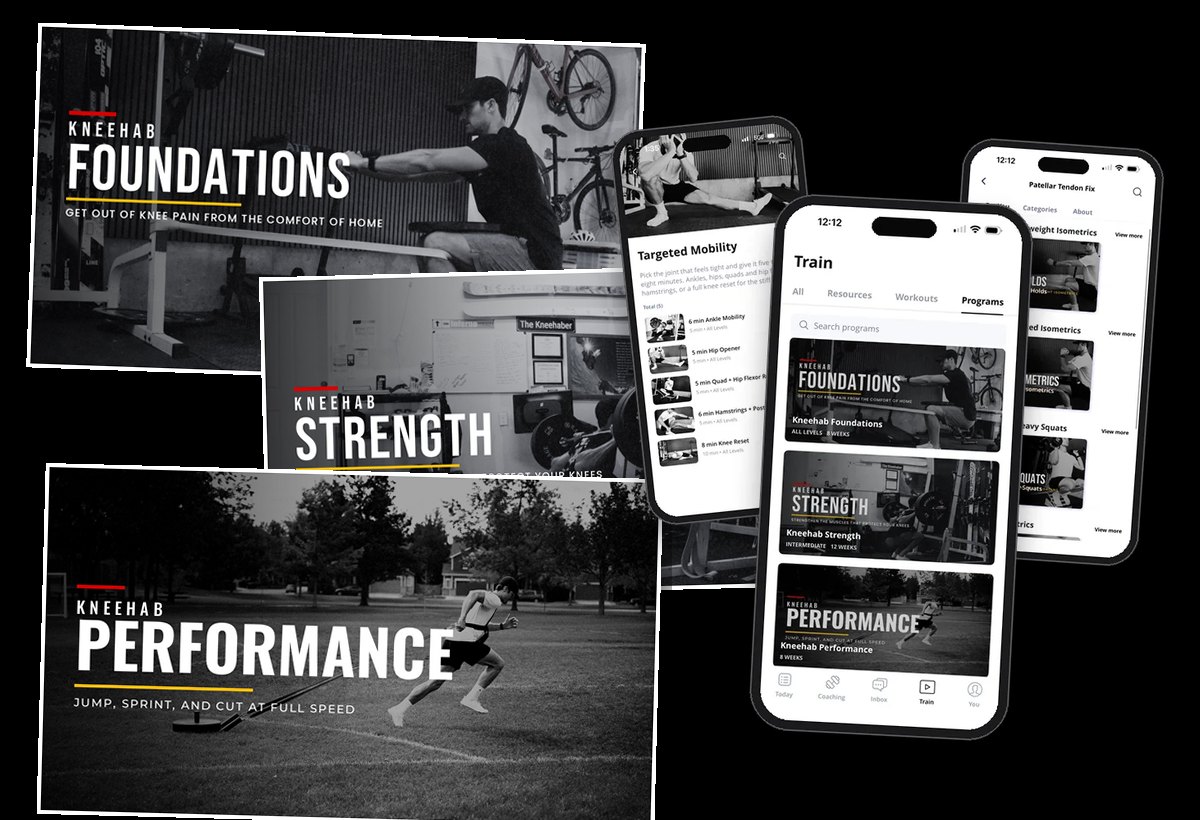
Foundations, Strength and Performance, and how they look in the app.
It's the strength training from this article, laid out session by session in an app, with a video of me doing every exercise, so you always know what to do next and how much weight to add. There are three main programs, and they go in order:
Kneehab Foundations (8 weeks, 24 sessions, bands and bodyweight). This is where you start if your knee hurts or you haven't trained it in a while. It gets the muscles around your knee working again, and you can do it at home.
Kneehab Strength (12 weeks, 36 sessions, gym or home setup). The heavy quad, hamstring and hip work from this article, with every week building on the last. If you're living without an ACL, this is the one that matters most.
Kneehab Performance (8 weeks, 24 sessions, gym and field). Jumping, sprinting and cutting at full speed, for when your leg is strong enough to get back to them.
The Patellar Tendon Fix, the Knee Mobility Library and my Ski program are in there too.
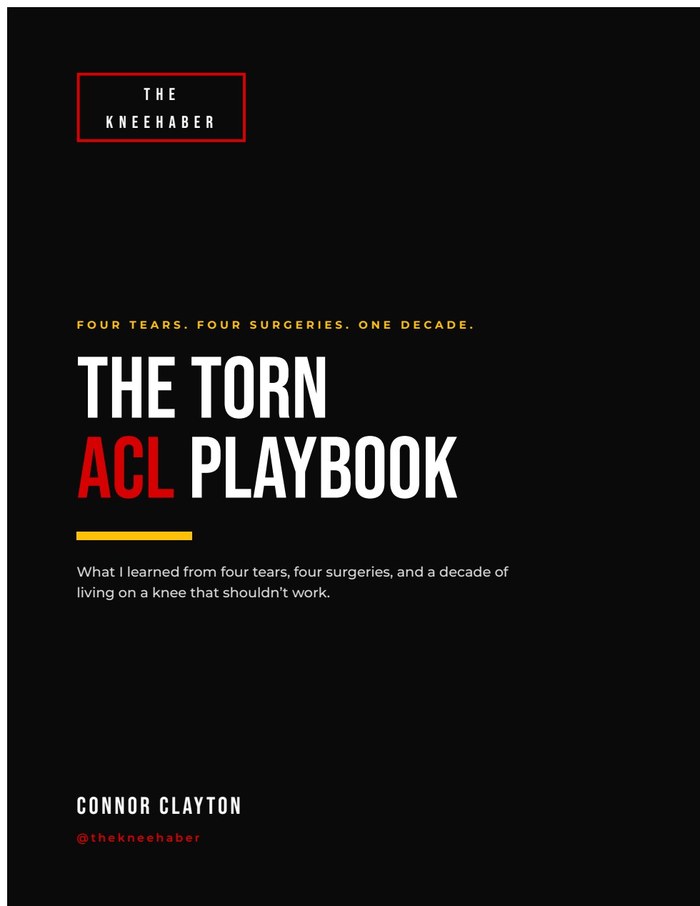
If this article helped, I also wrote a whole book on it. The Torn ACL Playbook is what I learned from four tears, four surgeries and a decade of living on this knee: the surgery path, the no-ACL path, my MRI, the full training chapter, what I do for flare-ups, and the mental side. It's an add-on to the Strong Knees System, and you'll see it offered right after you join.
The Torn ACL Playbook, an add-on when you join the Strong Knees System.
And if you'd rather have me build it around your knee and what you're trying to get back to, that's what 1:1 coaching is for. ACL knees are a big part of who I work with, once you're past the point of surgery or working with a physio. I'm the bridge from rehab to getting back to your sport. And if you've decided with your surgeon that living without an ACL is possible for you, I can help you build the strength to actually make that a reality.
A few questions I get about living without an ACL
Can you live a normal life without an ACL?
A lot of people do. In the trial I mentioned above, about half of the people who started with rehab never had the surgery. What "normal" means depends on what you ask of your knee. Walking, hiking, lifting, running and skiing are all very doable on a strong leg. Sports with full-speed cutting are where a knee with no ACL is most at risk.
Can a torn ACL heal on its own?
Usually not. A 2023 study tested a bracing protocol that holds the knee bent for the first weeks after the injury, and it found signs of healing on MRI in most of the people who did it. It's early research, and it's a decision for you and your surgeon in the first days after a tear.
What exercises should you avoid with no ACL?
I don't have a list of banned exercises. What matters more is the order you do things in: strength first, then balance, then landings, then cutting and sprinting. The fast, twisting, unplanned movements are the risky ones for a knee with no ACL, so they come last.
Thanks for reading all the way down here. Seriously, if you've gotten this far, thanks for sticking with me. If you want to talk through your own knee, send me an email at [email protected] and I'll do my best to help. Keep showing up, keep moving forward, and remember: you can't lose if you don't quit.